 English
 Nederlands
Milestone for Radiotherapy: The MR-Linac has arrived!
20 January 2026
After an intensive preparation and renovation process, the moment has arrived: our new radiation device, the MR-Linac (type Unity), has been delivered and installed. With the arrival of this device, we are taking a new step towards the future of precision radiation within our hospital.
A long-term process
The arrival of the MR-Linac did not happen overnight. The process already began in the second quarter of 2022 with the tender. During this process, with the help of lawyers and the procurement department of the UMCG, it had to be carefully formulated what the MR-Linac would need to be capable of. This ultimately became the Unity. In 2025, a major renovation of the bunker took place to house this machine. For example, the roof, which consisted of meters(!) of thick concrete, had to be cut out to ensure that the MRI could be lifted inside.
In September 2025, the device was delivered. Very recently, the installation and commissioning have been completed. During this final phase, the device is tested technically and clinically down to the smallest details, so that we are certain that everything meets the highest safety and quality standards before the first patient is treated.
New technique, new expertise
Not only is the device new; this also represents a major change for the Radiotherapy team. Because generating MRI images themselves and applying so-called online adaptive radiotherapy are new to the department, the colleagues involved have undergone intensive training in recent times.
Unique features of the device
What makes this device so special is the combination of a full-fledged (1.5 Tesla) MRI scanner with a linear accelerator (radiation device). This offers unique possibilities:
- Imaging prior to the session: We can make MRI images just before the radiation. This provides better contrast between different tissue types for some target areas.
- Anatomy of the day: No body is the same every day (think of the filling of the bladder or movement of the intestines). With the MR-Linac, we can adjust the distribution of the radiation dose for each treatment directly to the anatomy of that moment.
- Compensating for movement: Thanks to the live images, we can directly see movements (for example due to breathing) of the area we want to irradiate. The device is capable of compensating for this by temporarily stopping the irradiation when a tumor moves outside the irradiation area.
- Fewer side effects: thanks to all these properties, we can better spare the healthy tissue, which can reduce the chance of side effects.
Building the future
There are now 10 MR-Linacs of the Unity type in the Netherlands, but research into MRI-guided radiotherapy is still in its infancy. This provides us at UMCG with a great opportunity to actively contribute to the further development of MRI-guided radiotherapy.
Unique combination of techniques
The UMCG is one of the three centers in the Netherlands where treatment with proton therapy is possible. With the arrival of the MR-Linac, the Radiotherapy department now offers a unique range of radiation techniques, namely proton therapy and the MR-Linac. This combination is only offered under one roof in a few places worldwide. This means that we can always choose the most suitable radiation technique for our patients.
Clinically in use by mid-March
The department expects to put the device into clinical use around mid-March. On February 12, there will be the official opening to celebrate with colleagues that this milestone has been reached. We are proud of the team that has successfully managed this complex project and look forward to future developments regarding MRI-guided radiotherapy.
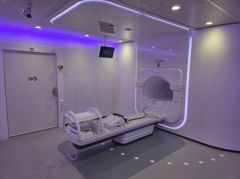 The new MR-Linac